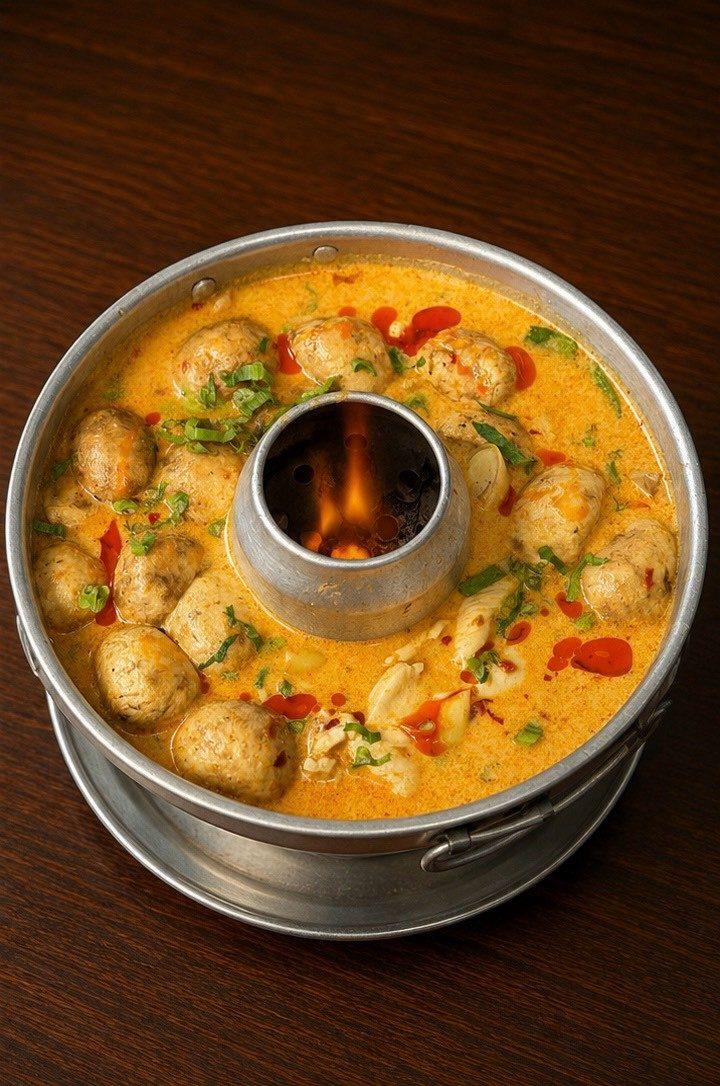
Tom Kha — Signature
The gentler cousin of tom yum. Coconut milk softens the chili; galangal — not ginger, never ginger — gives it the perfume that makes Thai kitchens smell like home.
Where it comes from
Tom kha gai (ต้มข่าไก่) is a Central-Thai everyday soup that became globally famous through Thai restaurants abroad. Its name is literal: tom = boil, kha = galangal, gai = chicken. The defining ingredient is the galangal — a rhizome that looks like ginger's cousin but tastes like nothing else: piney, citrusy, slightly soapy in the best way. Our chef's family makes it every time someone in the house catches a cold. "Coconut milk for comfort," her mother used to say, "galangal for the medicine, lime for the soul." Most Western menus over-sweeten it and under-spice it. Ours stays closer to the home version: bright, hot enough to wake you up, fragrant enough to be a hug.
How to eat it
Tom kha is meant to be eaten with rice — not as a starter on its own. Spoon some of the broth and a few pieces of chicken or shrimp over a small mound of jasmine, mix gently, eat in a single bite. The slices of galangal in the bowl are not for chewing — they're flavor delivery, like a bay leaf. Push them to the side. If it's too spicy, add a small splash of coconut milk from a side dish (just ask); if it's too mild, ask for our nam prik pao chili oil. The lime wedge on top is yours to deploy when it lands.
What’s in the bowl
- Fresh coconut milk and coconut cream
- Galangal (kha) — sliced thick, the soup is named after it
- Lemongrass, kaffir lime leaves, Thai chili
- Straw mushrooms, cherry tomato
- Lime juice, fish sauce, palm sugar
- Choice of chicken, shrimp, or mushroom
What goes with it
To drink
Pink milk or a chilled coconut water — both keep the heat friendly without numbing the herbs.
On the side
Jasmine Rice · Fresh Spring Rolls · Sticky Rice
Good to know
Contains the following common allergens — please flag any sensitivities when you order and we’ll adjust:
— From our kitchen“When my mother was sick, she asked for tom kha before she asked for medicine. I think it's because every spoon tastes like the kitchen we grew up in — the same coconut, the same galangal, the same lime hitting the bowl right at the end. I cook it the same way now, in California. The galangal is harder to get here, but I won't substitute. It has to be kha.”
More from Soup
Not sure how to judge a plate like this? Read our field guide to the best Thai food in Orange County — five signs of a real Thai kitchen, and what to order once you’re in one.